Choosing Between Segmental Or Boulder Retaining Walls
Retaining walls play an essential role in shaping North Texas landscapes. Whether you’re managing elevation changes, preventing erosion, or building out usable outdoor living spaces, the type of wall you choose can influence both functionality and appearance. Two of the most popular options are segmental retaining walls and boulder (natural stone) retaining walls. Each offers unique advantages, and understanding their differences will help you choose the right solution for your property.
This guide is designed to give homeowners throughout Collin and Denton Counties—in cities like Aubrey, Celina, Frisco, Irving, Little Elm, McKinney, Pilot Point, Plano, and Prosper—a clear understanding of how each wall type performs in the North Texas climate.
Segmental Retaining Walls: Modern Strength and Precision
What Are Segmental Retaining Walls?
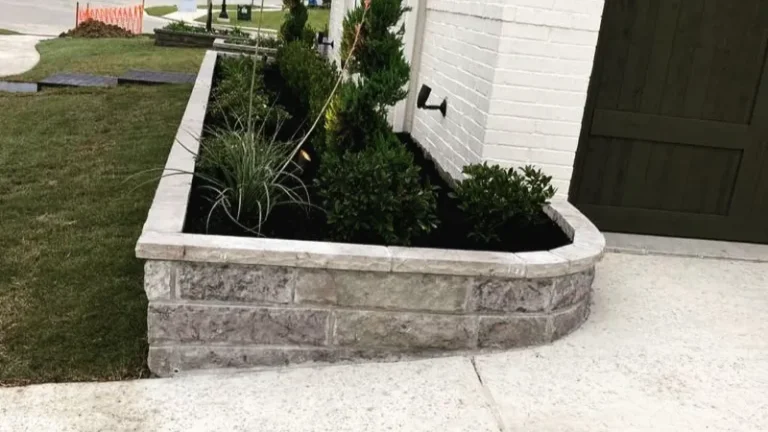
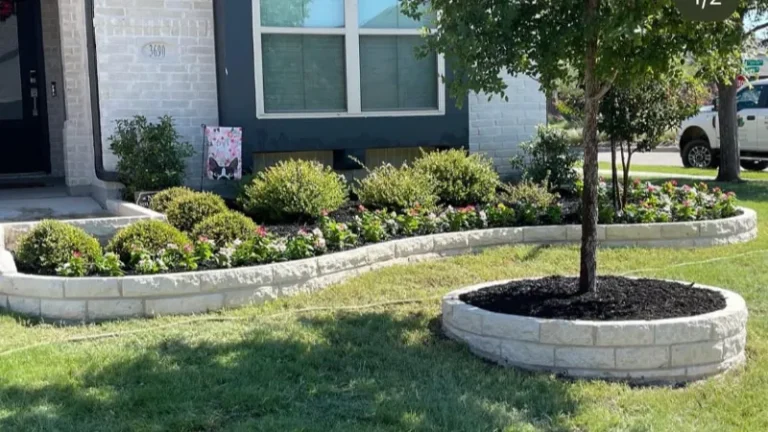
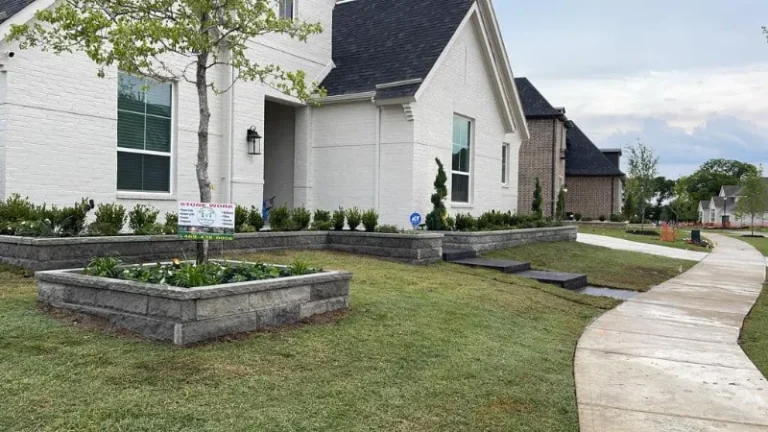
Segmental retaining walls are built using high-strength, modular concrete blocks engineered to interlock without the need for mortar. They are designed for stability, drainage, and long-term performance when built correctly.
Pros of Segmental Retaining Walls
Engineered Reliability
The blocks are manufactured to fit together precisely, helping the wall withstand soil pressure and movement—an important factor in North Texas’s expansive clay soils.
Design Flexibility
Available in a wide range of shapes, colors, and textures. This makes it easy to match or complement outdoor living areas, patios, garden spaces, and architectural styles.
Efficient Installation
Because individual blocks are manageable in size, installation is often faster and may require smaller equipment depending on the wall height.
Predictable Performance
Segmental wall systems come with engineering-backed specifications, making planning and permitting more straightforward.
Cons of Segmental Retaining Walls
Appearance May Feel Uniform
Although they come in many styles, segmental blocks won’t replicate the completely organic look of natural stone.
Repairs Can Be Complex
If damage occurs in a lower section, portions of the wall may need to be disassembled to repair the issue.
That said, properly installed segmental walls rarely fail.
Best Uses for Segmental Walls
Segmental retaining walls are ideal when:
- You need a durable, engineered solution
- You want design versatility
- You’re creating terraces, garden beds, patios, or tiered elevations
- Access for large machinery is limited
These walls work extremely well across residential neighborhoods in Frisco, Plano, McKinney, Celina, and Little Elm, where lot sizes and access points vary.
Boulder Retaining Walls: Natural, Rugged Beauty
What Are Boulder Retaining Walls?
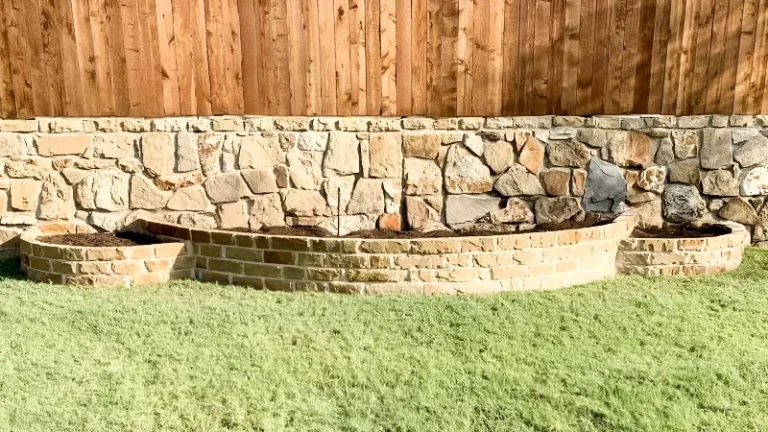
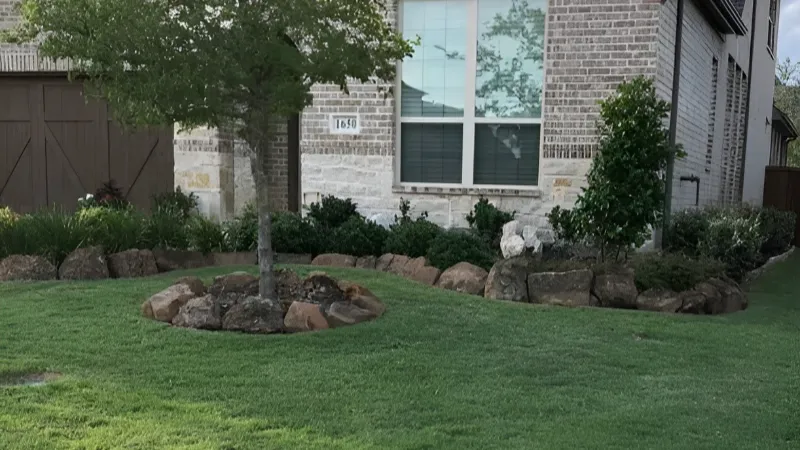
Boulder retaining walls are constructed using large natural stones or boulders. They rely on the weight and placement of the stones—rather than engineered interlocking systems—to support the soil.
Pros of Boulder Retaining Walls
Natural Aesthetic
Boulder walls look organic and timeless. They blend seamlessly with properties that want a rustic, natural appearance.
Durability
Natural stone holds up extremely well to weather and soil movement. Boulder walls age beautifully and take on a character of their own.
Low Environmental Impact
Using locally sourced stone helps reduce transportation and material processing impacts.
Cons of Boulder Retaining Walls
Installation Requires Heavy Equipment
Boulders can weigh hundreds or even thousands of pounds. Installing them safely and correctly requires experienced operators and larger machinery.
Less Predictable Engineering
Without pre-engineered guidelines, wall performance depends on the skill of the builder, the size and shape of the stones, and the site conditions.
Access May Be a Challenge
Properties in neighborhoods with tight side yards or limited entry—like many homes in Frisco, Plano, and Irving—may not allow machinery to reach the installation area.
Best Uses for Boulder Walls
Boulder walls are ideal when:
- You want a natural, organic look
- Your property offers easy access for heavy equipment
- You have larger, more open spaces (common in Aubrey, Pilot Point, and Prosper)
- You’re building a wall that complements natural slopes or open landscapes
Key Considerations for Homeowners
Equipment & Machinery Needs
- Segmental Walls: Often require smaller equipment; blocks can sometimes be moved by hand.
- Boulder Walls: Require heavy machinery to transport and set stones.
Property Access
Limited access may eliminate boulder walls as an option. Segmental walls are far more adaptable to tight spaces.
Engineering & Permits
Segmental systems come with clear engineering parameters, making compliance simpler.
Boulder walls may require additional review to confirm long-term stability.
Slope, Design, and Aesthetics
- Segmental walls offer precise, structured designs, making them perfect for terraces, seating walls, garden beds, and patios.
- Boulder walls feel natural and irregular, ideal for properties blending into the surrounding landscape.
Conclusion
Choosing between a segmental or boulder retaining wall comes down to your property's layout, your design preferences, and the functional needs of your landscape. Segmental walls offer engineered reliability, design flexibility, and excellent performance in residential settings throughout Collin and Denton Counties. Boulder walls, on the other hand, deliver a rugged, natural look and unmatched character when the site can accommodate heavy equipment.
Both options can dramatically improve the usability and beauty of your outdoor space when installed by experienced professionals.
If you’d like help determining the best retaining wall style for your yard, FJV Landscape And Irrigation can evaluate your property, discuss your goals, and design a wall that fits your terrain and your vision.